As consumers we are over exposed to advertisements that show either women or man in a sexual way in order to attract more people to buy products. Why are consumers attracted more by explicit sexual images?

I love reading fashion magazines and try to get inspiration for my shopping from social media such as Instagram or Facebook, and recently I have been seeing so many advertisements and images of women used in a sexual way or as objects from what they used to be my favourite fashion brands.
For this reason I decided to research more on the topic in order to understand why such famous brands use the figure of the women in a sexual way in order to increase sexual arousal in the target audience and sell more.
Advertising is a persuasive form of media which people do not always give conscious attention at. This is one of the main reasons why global brands try to advertise their product using subconscious messages that include sexual images in order to increase sexual arousal in consumers. Research has shown that violence against women is a serious public health and human rights concern (World Health Organization 2000) and that the simultaneous presentation of women as sex objects and victims in various forms of media increases acceptance of violence against women (Malamuth et al. 2000). For example, many advertisements have been banned from the public audience because they were considered to express images and messages that could increase violence against women. Sometimes we watch pictures of products advertised passively, and somehow we got to remember the name of the brand or the product without realising the reasons behind it.

Sex in advertising can be considered to mediate messages in order to persuade people in buying branded goods (Reichert, Heckler, & Jackson, 2001). Sexual behavior also includes sexualised language and vocalics or the way words are vocalised. For example, models that speak in breathy, panting, and low tones contribute to sexual interpretations. From a psychological perspective, researchers have generally hypothesised that sexual information in ads is noticed and subsequently remembered.
 According to Rohlinger (2002) the image of women and menm victimised that used to be only limited to pornography, is recently used not only in films and television shows, but in advertising as well. The body positions as well as facial expressions, and sexual power relationships between men and women that occur in advertising have often been adopted from violent pornography. Rohlinger provides examples of specific advertisements in which women and men are shown as physically and emotionally vulnerable, and in which men are unambiguously seen as overpowering women.
Since the 1960s, experts in the field of psychology and social sciences have attempted to understand the role of sex in advertising for selling brands. Specifically, they have attempted to understand exactly how sexual content influences the advertising communication process.In a study conducted by Stankiewicz and Rosselli (2008), they explored more than 1’988 advertisements that shown women appearing as either sexual object or victims. The study analysed printed and media advertisement and the results shown that men’s, women’s fashion, and female adolescent magazines were more likely to portray women as sex objects and as victims than news and business or women’s non-fashion magazines. In this study they also found out that advertisements containing sexual images were more likely to be remembered and recalled. 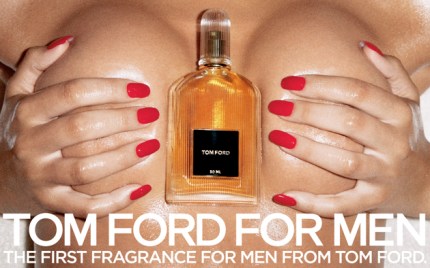
However, even if many brands use sexual images and pictures of women in order to impress and sell more products, recent research suggest that sex does not sell. A recent study conducted on films analysed 914 films released between 2001 and 2005. From the analysis of the scenes and nudity images they found out that sex and nudity do not boost box office performance, earn critical acclaim, or win major awards. Although female involvement does influence a film’s content, the only impact on the presence of sex and nudity is the proportion of women who make up the cast (Cerridwen et al,2009).

After having researched about the reasons behind the use of sex in global brands advertisements I can tell that not only we live in a world in which we do not even notice the distressing and disturbing images proposed by advertisements that we get to see evey day, but also we are more likely to remeber them and buy their products.
 InstaConsumer
I like your blog! You have let me surprised how you get so many advertisements with sexual images, and it is the first time I know that selling a hamburger can use this kind of images! I just not understand why those advertising executives thought these images will attract people to buy it. I do not know what the people in other countries think about the images, but I am sure that, in my country, especially those well-educated men will look down on those advertisements because they think that man should respect women.
But anyway, I thought sexual ads can attract people to buy some goods such as luxury goods. However, when I was searching on the Internet for improving my attitude and contradict your argument, I realized that the question is not easy to answer. One paper said that different countries with different cultures have different attitudes to these advertisements. Meanwhile, another paper used statistics to sustain that sexual appeals only can affect people’s attitudes the brand rather than the intention to purchase the product. (Sorry, I can only read the abstract of the two papers because I do not want to pay for it)
However, one paper asserts that the ads harness people’s sexual insecurities such as the willingness to attract the opposite sex . And I think it’s make sense. It is not hard to find out that some girls always nervous about their weight and try to eat diet pills even when they are malnourished, and the ads of diet pills in some countries prefer to use sexy girls’ images.
Therefore, I think the sexual appeals must have some influence on people’s attitudes, but whether it can really persuade people to take the action to buy the product influenced by many other aspects.
Reference:
So, S. L. (1996). Does sex sell in a Chinese society: An empirical study. Journal of Promotion Management, 3(1-2), 79-94.
Wirtz, J. G., Sparks, J. V., & Zimbres, T. M. (2018). The effect of exposure to sexual appeals in advertisements on memory, attitude, and purchase intention: a meta-analytic review. International Journal of Advertising, 37(2), 168-198.
Harrison, N. E. (2001). All consuming desire: Advertisers prey on our sexual insecurities to mass-market products and services. Alternatives Journal, 27(3), 24.
LikeLike
This was a very interesting read, and liked how you combined the images to go along with your topic. I found it fascinating that we are not always aware of the advertisements that we are being exposed to and what the advertisers are trying to portray from them. We often hear that sex sells, therefore it was interesting to learn from Cerridwen et al (2009) study that this is not actually true, yet companies still apply it to advertisements. It will be fascinating to see whether factors such as the “me too” movement will make an impact on this form of advertising, in a way Dove has with it’s real women theme. I found an interesting study from a feminist organisation which had a strong view on Dove’s new campaign and the potential impact it can hold, intriguing to see another side of this new form of positive advertising. I have included the reference if you would like a look.
Murray, D. P. (2013). Branding “real” social change in Dove’s Campaign for Real Beauty. Feminist Media Studies, 13(1), 83-101.
LikeLike
This is really interesting. I mean, sex does sell for me cause the main reason I clicked in this article is I see the attractive woman in the cover. And those pictures in the post keep me away from boring and help me read through the whole article.
I think the experiment you have mentioned in the post that sex and nudity do not boost box office performance, it make sense. But I think it is because of the decision model, cause usually, people decided which movie to watch first. Besides that, cinema is more a social place, most of the people are not gonna invite people to see nudity in cinema.
In fact, some experiment shows that sexual advertisements perform better than non-sexual advertisements in the memory recall measures (King, James et al., 2015). And also, the experiment partially supported that sexual advertisement will be rated as more engaging and more involving (Leka et al., 2013).
And based on my experience, I can’t say that sex will increase the sells rate, cause consumer behaviour is a very complicated thing. In fact, I do notice I will be willing to spend more money when the object is related to sex.
Reference:
King, James, et al. “Sex Really Does Sell: The Recall of Sexual and Non-Sexual Television Advertisements in Sexual and Non-Sexual Programmes.” Applied Cognitive Psychology, vol. 29, no. 2, 2015, pp. 210–16, doi:10.1002/acp.3095.
Leka, Jona, et al. “Memory for Sexual and Nonsexual Television Commercials as a Function of Viewing Context and Viewer Gender.” Applied Cognitive Psychology, vol. 27, no. 5, 2013, pp. 584–92, doi:10.1002/acp.2939.
LikeLiked by 1 person
Parker and Furnahm (2007) showed that tv advertisement content (sexual verses non-sexual) interfered with advertisement brand recall. They also showed advertisement content had no effect on brand recall. This was even more evident when the program shown was sexual in nature (Sex and the City). Though they did show non-sexual content was more memorable for women and sexual content was more memorable for men. So far I have seen no study which compares other forms of emotional stimulation to sex. Shock, for instance, may have a similar level of affective valence and be as effective or not as sex (Dahl, Frankenberger, & Manchanda, 2003).
References
Dahl, D., Frankenberger, K., Manchanda, R. (2003). Does It Pay to Shock? Reactions to Shocking and Nonshocking Advertising Content among University Students. Journal of Advertising Research, 43(3), 268-280. doi:10.1017/S0021849903030332
Parker, E., Furnham, A. (2007). Does sex sell? The Effect of Sexual Programme Content
on the Recall of Sexual and Non-Sexual Advertisements, Applied Cognitive Psychology, 21. 1217-1228. Retrieved from doi: 10.1002/acp.1325
LikeLike