What goes into a follower mind?
Instagram is one of the most popular social media in which people communicate and share their lives through photos and live stories to other users. In the past decade Instagram has become also a platform in which people such as influencers or celebrities use their profile as a marketing place to advertise and sell their favourite products or brands.
The question is why are we as followers so much influenced by celebrity’s way of living, dressing and buying? And why celebrities are so impactful when it comes to advertise products and services?

Fashion blogger such as Chiara Ferragni(15MLN of followers) or Mariano di Vaio (6.2MLN of followers) have created this new marketing strategy of advertisement using Instagram as a main platform to share and advertise not only global and fashion brands but also their own brands (The Blonde Salad by Chiara Ferragni and NowHow by Mariano di Vaio). According to a new report in WWD, Chiara Ferragni is on track to earn more than of $18 million in 2018. 30% of that number will come from advertising and brand partnerships, while the remaining 70% will come from her luxury shoes line, the Chiara Ferragni Collection.
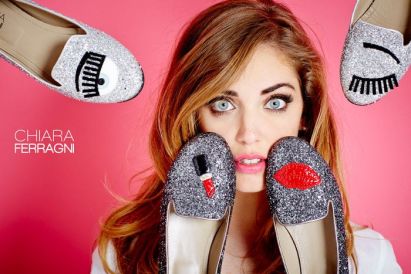

Fashion Bloggers use live stories and posts in order to share and influence their followers to buy every single product or service they are using in relation to their lifestyles and
preferences.
Followers who identify themselves into the social group of fashion bloggers are found to be more likely to buy products advertisement through celebrity endorsement (Wang,Yu and Wei,2012) Empirical studies in the area of celebrity endorsement have focused on how specific celebrity characteristics influence consumers’ evaluations and recall of advertisements as well as the featured products and brands (Lynch and Schuler, 1994). For example, The Source Attractiveness Model posits that a message results effective depending on the similarity, familiarity, liking and attractiveness of a celebrity (McGui re, 1985 ) For instance, followers choose to buy and relate their preferences in terms of clothes, accessories and even holiday destinations according to the celebrity they feel more attached with. As a follower of many Italian fashion bloggers I choose to imitate and purchase the products they advertise because I found myself to agree and like the way they express themselves through fashion and lifestyle.
However, this theory has been criticised because it fails to explain the link between the celebrity and the brand advertised. Every brand is associated with feelings and emotions that consumer recall and associate with their own attitudes and preferences (Esch et al,2010). In this neuropsychology study using fMRI they found that consumers use experienced emotions instead of declarative information to evaluate brands. As a result, emotions and familiarity that are recalled by a brand should be considered a key driver of brand equity in addition to brand awareness. This is why I often feel influenced to buy products of brands sponsored by fashion bloggers because they remind me of positive feelings and emotions that are correlated with my way of thinking and living.
Other studies found that purchase intention is high when the consumer has a strong attachment to the celebrity who advertises that specific product but also decreases when the celebrity advertises more than one brand (Laroche, Habibi and Richard, 2013)
Fashion blogs can indeed affect follower’s consumer behaviour, as they are able to create a strong relationship between the blog and its followers, resulting in the advertisement being viewed in a personal and non-intrusive way.
In conclusion, the reasons behind the process of purchasing products advertised from celebrities on Instagram are to be researched more in depth in terms of followers choices of purchase and attachment.
 InstaConsumer
Enjoyed reading your Blog. The title and presentation were attractive, inviting a close read. Using the link between the Source Attraction Learning Model and Instagram used for advertising was interesting. Maddux & Rogers, (1980) propose that not only has a source to be attractive there also requires an air of expertness to be expressed. Using this argument, take Kate Moss, as an ambassador for: ‘Burberry, Channel & H+M’, Kate found that after the London Daily Mirror ran a story on her cocaine use, her image was no longer required. The loss of $4 million dollars, after being dropped from the above brands, may be attribute to a loss of expert control over her life-style choices.
An exciting personality, enjoying life in an approved manner, projects expert management and a good role model to pair with a quality product. When a celebrity appears out of control and inadequate, a perception may evolve regarding inappropriate behaviour as amateur and undesirable. A brand will not want to be paired with a celebrity exhibiting a seemingly downward spiral of uncontrolled behaviour.
Reference
Maddux, J., & Rogers, R. (1980). Effects of source expertness, physical attractiveness, and supporting arguments on persuasion: A case of brains over beauty. Journal Of Personality And Social Psychology, 39(2), 235-244. doi: 10.1037//0022-3514.39.2.235
LikeLiked by 1 person
Really enjoyed reading this, I was super interested about the study by Laroche, Habibi and Richard (2013) about when a celebrity endorses more than one product the purchase intention decreases.I also found this paper (https://essay.utwente.nl/67348/1/Graefingholt_BA_MB.pdf) which raises really interesting concepts about Web 2.0: “a world with different internet based applications” (Laroche, Habibi & Richard, 2012) and how it may be contributing the strong influence of celebrity endorsement online, you should have a read
References
Gräfingholt, G. (2015). Online customer reviews vs celebrity-endorsed sport brands: Effects on customers’ brand image perception (Bachelor’s thesis, University of Twente).
Laroche, M., Habibi, M. R., Richard, M. O., & Sankaranarayanan, R. (2012). The effects of social media based brand communities on brand community markers, value creation practices, brand trust and brand loyalty. Computers in Human Behavior, 28(5), 1755-1767.
LikeLiked by 1 person
Your blog is really interesting, I love your blog, though I have to overcome the difficulties of understanding the sentences with grammars that I never saw before. I love it partly because that the nice warm color preview and the bright colors of words made me feel comfortable, so it persuaded me to finish the reading.
I was really interested in the content of the blog, so I read more analogous papers about it.
Two papers mention that people responding to advertisements with celebrities relate to conditioned stimulus which responds to classical conditioning. Therefore, I think the theories partly explain why some fans prefer to use the products endorsed by the celebrities rather than any other kinds. Is it because their adoration to the celebrities is a kind of unconditioned stimulus, and the pleasant association of products caused by the celebrities triggered their neutral response to the products gradually evolved into a conditioned response? I hope it makes sense.
Lynch, J., & Schuler, D. (1994). The matchup effect of spokesperson and product congruency: A schema theory interpretation. Psychology & Marketing, 11(5), 417-445.
Till, B. D., Stanley, S. M., & Priluck, R. (2008). Classical conditioning and celebrity endorsers: An examination of belongingness and resistance to extinction. Psychology & Marketing, 25(2), 179-196.
LikeLike
I loved how this blog captured my attention. I have always been interested as to why so many people are advertising on Instagram but it seems to be a goldmine for many different brands who use celebrity endorsements. I think it’s fascinating how the general public’s responses to products are different if they are being advertised by a familiar face, a beautiful face or a famous face.
I think this blog is beautifully designed and the photographs make it easy to work my way through your posts fluently.
LikeLike
( Addition to my previous comment )
Reference
Tripp, C., Jensen, T. D., & Carlson, L. (1994). The effects of multiple product endorsements by celebrities on consumers’ attitudes and intentions. Journal of consumer research, 20(4), 535-547.
LikeLike
Hi Sonja,
This was such a lovely post! As a professional blogger whose main focus/income is Instagram, I found it fascinating to see the science behind what I do. One thing that is really interesting at the moment is the power of the micro influencer (although people are still arguing about what counts as a micro-influencer, under 100,000 seems to crop up a lot). Micro-influencers can often yield a higher ROI despite having a smaller audience (http://bit.ly/2OH0nlk) perhaps as consumers are more aware that bigger influencers are being paid thus trust them less (http://bit.ly/2AoBPVC)? I believe moving forward it will become increasingly important for brands/influencers to create partnerships where their audiences are aligned and it feels authentic, so consumers trust them. Without this trust will be lost and influencers may begin losing their influence (http://bit.ly/2EFLfA3).
Best, Becky 🙂
LikeLiked by 1 person