New York, Rome, Sydney, Ibiza? Where is your next holiday going to be and why?
Nowadays people are over exposed to holidays brochures, holidays pictures and travel advertisements, but what are the reasons that bring people to choose to go to a place over another?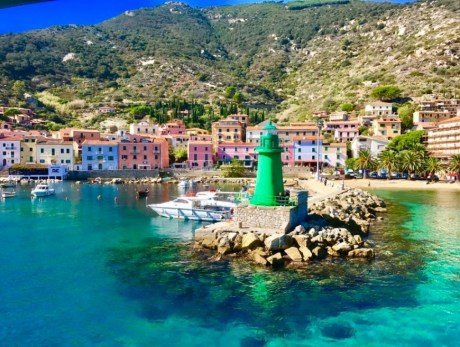
One of the main resources used for travel and holidays advertisements is photography. This is because one single picture can convey a large variety of information that attracts the attention of individuals (Kim and Stepchenkova, 2015)
In the tourism market it is often hard to present a real expectation of the experience through advertisements, and this is why many marketers in the field use photos and text in order to promote holiday destinations (Hunter,2016) . Scientific studies identify pictures as visual cues that capture attention and perceived destination image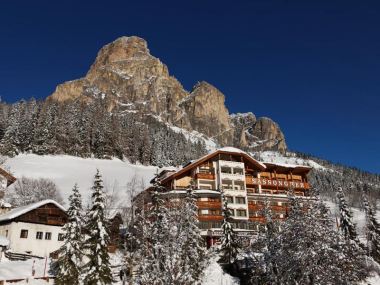 according to the theory of selective attention.
Selective attention, is one of the most important aspect that deals with the search in vision. The visual attention mechanism has been found to involve the following factors: the selection of a region of interest in the visual field; the selection of feature dimensions and values of interest: the control of information flow through the network of neurons that constitutes the visual system and also the shifting from one selected region to the next in time ( Tsotsos et al, 1995) This explain why in many holidays brochures and advertisements, photos and text are the main region of interest in order to attract the attention of the people looking at it. 
A scientific study conducted by Li, Huang and Christianson (2015), using eye tracker examined consumers’ visual attention toward tourism photographs with text inserted in landscapes and measured the perceived advertising effectiveness. They found that the text in the destination photographs is essential for the visual attention even if is in a language not known by the consumers. However, another interesting finding of the study is that participants reported a larger perceived advertising effectiveness toward tourism photographs that included text in their mother-tongue language. The study recruited only Chinese participants and they were shown advertisements with arabic text and Chinese text, and due to cultural differences future research could investigate on different spoken languages and culture of participants. These findings are interesting in terms of understanding how consumers perceive holiday destinations and the experience related to that specific place and therefore how consumers choose to book a trip in a place over another.
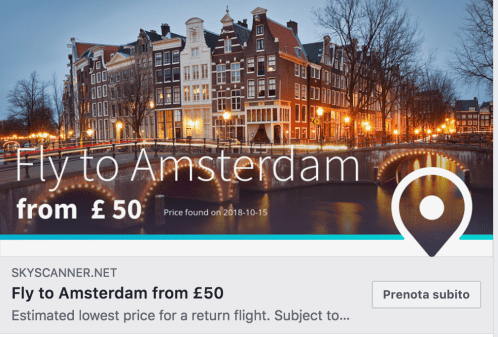
In conclusion, people seeking to book their next holiday are found to be attracted by the images and representation of the advertisements as well as the text embedded in the picture. It always seems hard when we need to find the perfect place for our holidays, we think about the price, the type of the holiday and by looking at the photographs tourists are able to imagine they perfect holiday and experience.
So wherever your next holiday is going to be, have a good journey!
Sonja Milano
 InstaConsumer
Hi, I liked the Blog content and thought it was well constructed. I think there might have been a minor grammatical error in the first Blog. Or at least it didn’t read right to me. I would have like to see a break down of the features of landscape/ tourist pictures which are most important or catch the eye. Maybe also on the appeal of holidays, how it fits in with needs/ wants. Thanks.
Messaris, P. (1997). Visual Persuasion: The Role of Images in Advertising, SAGE: California
LikeLike
Hi Sonja,
This was an interesting read! My last blog entry was on a similar topic, although I focused more on Instagram and it’s influence on tourists. It’s true that pictures can convey a lot more information in a shorter amount of time than written words or speeches about certain places and I know for certain that Instagram has influenced my travelling decisions. It’s become a hugely popular trend to post travel photos on Instagram and in my blog post I mention this particular account because I find it so interesting. https://www.instagram.com/insta_repeat/?hl=en
It shows how other instagrammers influence each other on what pictures to post.
I thought your inclusion of the Li, Huang and Christianson (2015) study was fascinating, especially the bit about having their own language influence their decisions. I think this definitely has to do with familiarity. Travelling can be intimidating, especially if you’re going somewhere that doesn’t speak the same language as you. By making these places seem familiar, companies can draw tourists in.
Kardes, Kline & Cronly (2008) state that the more we see something, the more we end up liking it as well as similarity. If something is similar to us, we like it more. This should definitely play into why tourists would rather see advertisements in their native language. They’ll like it more if they can relate to it.
Kardes, F., Cline, T., & Cronley, M. (2008). Consumer Behaviour Science and Practice. Boston: Cengage Learning.
LikeLiked by 1 person
Enjoyed reading your new blog! You’ve made me realized how the visual system induct us to observe something and how the brochures and booklets of tourist spots try to attract us by photography .o You guided me to read more papers. In one paper I learned that , when people searching on the Internet, they tend to use more time to read the words. And most people prefer to read the words of print advertisements on the website page at first though the pictures or images of print advertisements seems to be more attractive. So I doubt that whether these holiday brochures are similar to the websites because when I was watching the information in holiday brochures, I usually prefer to watch the photos at first. If the photo is attractive for me, then I decide to read the words and details of the photos.
By the way, I never saw any eye tracker before. I would like to have a look at the machine and learn how to use it if I will have the chance in one day.
Reference:
Pan, B., Hembrooke, H. A., Gay, G. K., Granka, L. A., Feusner, M. K., & Newman, J. K. (2004, March). The determinants of web page viewing behavior: an eye-tracking study. In Proceedings of the 2004 symposium on Eye tracking research & applications (pp. 147-154). ACM.
LikeLike
Enjoyed reading your new blog! You’ve made me realized how the visual system induct us to observe something and how the brochures and booklets of tourist spots try to attract us by photography .o You guided me to read more papers. In one paper I learned that , when people searching on the Internet, they tend to use more time to read the words. And most people prefer to read the words of print advertisements on the website page at first though the pictures or images of print advertisements seems to be more attractive. So I doubt that whether these holiday brochures are similar to the websites because when I was watching the information in holiday brochures, I usually prefer to watch the photos at first. If the photo is attractive for me, then I decide to read the words and details of the photos.
By the way, I never saw any eye tracker before. I would like to have a look at the machine and learn how to use it if I will have the chance in one day.
Reference:
Pan, B., Hembrooke, H. A., Gay, G. K., Granka, L. A., Feusner, M. K., & Newman, J. K. (2004, March). The determinants of web page viewing behavior: an eye-tracking study. In Proceedings of the 2004 symposium on Eye tracking research & applications (pp. 147-154). ACM.
LikeLike
Sorry, this comment should be pasted 3 week ago…… I forget to past it on the website…….
LikeLike